General
Lockable racks give condo buildings logged, billable lock box access in one spot. Compare RackLite and RackVault, then book a demo with LockboxRack.
What Is a Lockable Rack and How Does It Work?
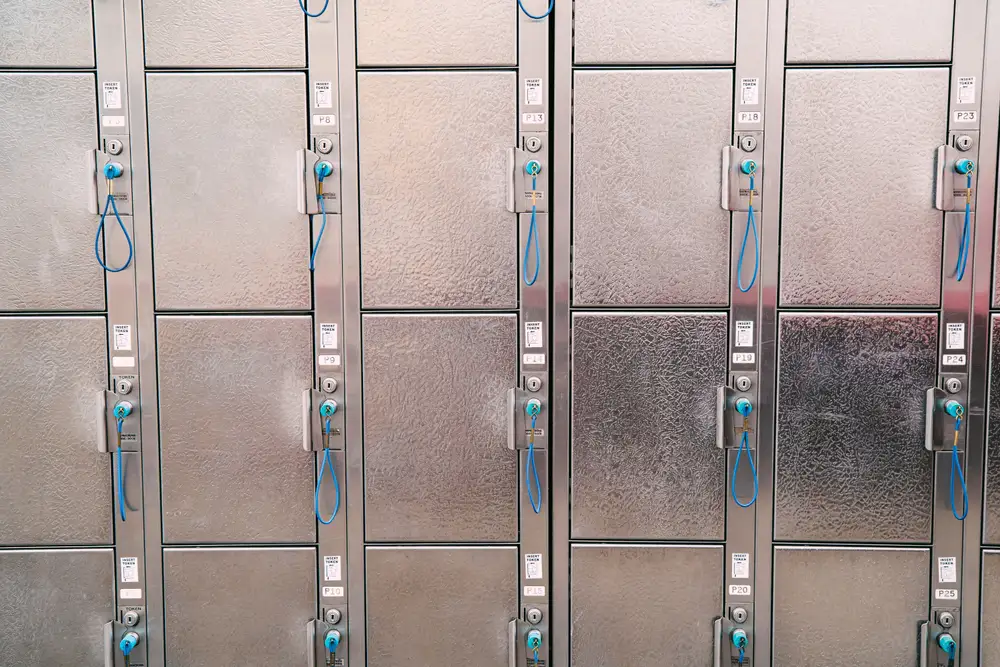
Lockable racks are a single mounted frame of individually locking slots, each holding one key or lock box, installed in one controlled spot inside a building. A property manager owns the frame. Realtors reserve a numbered slot online for the length of a listing. The building keeps an auditable record of who opened which slot, plus rent from space that earned nothing before.
Picture the usual mess first. Twenty agents clip twenty boxes to railings, gas meters and fences near the front door. Nobody owns the pile. A lockable rack replaces that with one wall unit of numbered, separately locked compartments.
Lockable racks are, at heart, an access-control system with a physical frame attached. The frame is the part you see. The value sits in the software that logs each open, bills each realtor and shows management a live list of who holds a slot.
How does slot-based lock box access work?
An agent books a slot through a web dashboard, not a downloaded app. LockboxRack runs a browser interface plus a QR code scan at the rack, so there is nothing to install. The agent scans, confirms the booking, and the assigned compartment releases the key inside.
Each open writes one line to the log: slot number, agent, date and time. In our experience, that single record settles most “who was in the unit” arguments before they start, because the answer is already written down.
What is qr code lock box registration?
Every slot uses qr code lock box registration, scanned once at the rack to tie a realtor to a numbered compartment for the listing period. There is no keypad code to pass around and no spare fob to lose. When the listing ends, the registration lapses and the slot returns to the pool for the next agent.
Want the mechanics of the hardware itself? Our guide to the rack-mount lock box walks through the frame, and how LockboxRack works for property managers covers the day-to-day.
Why Lockable Racks Matter for Condo and Apartment Buildings

Lockable racks matter because uncontrolled lock boxes are a security and liability problem condo boards can no longer wave off. When keys hang in random spots behind shared codes, nobody can prove who entered a unit. A managed rack turns loose access into a logged, billable, board-approved system, which is what regulators now expect.
The volume is real. According to the Canadian Real Estate Association (CREA), Canadian MLS Systems recorded 470,314 home sales in 2025, down 1.9% from 2024 (CREA, January 2026). Every one of those listings needed repeat access by agents, inspectors and photographers.
Regulators have started pushing back on how that access happens. According to the Real Estate Council of Ontario (RECO), reported by Real Estate Magazine, the regulator received 20 to 40 complaints a year over the last five years about agents giving unauthorized access, and fines have run from $5,500 to $9,500 (RECO, 2026).
“You’re giving somebody a key with no idea what they’re going to do with it. That’s a major breach of trust.”
What realtor lock box rules condo corporations must follow?
Directors often ask about the realtor lock box rules condo corporations must follow. In Ontario, RECO Bulletin 7.2 is blunt: a lock box goes in only with the seller’s written consent, appointments run through the listing brokerage, and unauthorized access outside booked times is prohibited. A rack does not replace those rules. It enforces them, because access is booked, logged and time-bound by default.
Can a lockable rack reduce front desk workload?
Yes. A managed rack helps reduce front desk workload realtor lock boxes create when concierge staff have to escort every visitor, hunt for a key, or field calls about a code that stopped working. We found that most buildings we work with move agents to self-serve at the rack within a week. The desk stops being the access bottleneck.
Running a higher-turnover building? Discover RackVault for high-turnover buildings and see how the logged slots hold up under real volume.
Top Lockable Rack Options and How to Compare Them
The main choice is between building-managed slot racks and per-agent electronic boxes. RackLite and RackVault are racks a property manager installs and controls. Supra and SentriLock are individual smart boxes an agent carries to any listing. They solve different problems, and a building usually wants the rack, not another loose box on the door.
When comparing lockable racks and the individual-box systems, look at who controls access and where the audit trail lives. With a rack, the building holds the record. With a per-agent box, the record sits with the agent or the MLS.
“As soon as the technology became available, I made it a strict policy in my business to stop using traditional lockboxes.”
RackLite or RackVault: which slot rack fits your building?
RackLite suits smaller condos with steady, lower listing turnover. RackVault is the reinforced, higher-capacity unit for larger or busier buildings, and it pairs the open log with per-slot billing. Both use the same web booking and QR scan, so agents learn one flow.
| Option | Form factor | Access method | Audit trail | Best for |
|---|---|---|---|---|
| RackLite | Wall rack, lower slot count | Web booking plus QR scan | Per-slot open log | Smaller condos, steady turnover |
| RackVault | Reinforced rack, higher capacity | Web booking plus QR scan | Open log plus billing | Larger or high-turnover buildings |
| Supra eKEY | Individual electronic box | Agent smartphone app | Digital, per box | Individual agents, not building-managed |
| SentriLock | Individual smart box | App plus access code | Digital, per box | MLS-integrated markets |
Comparison of building-managed racks and per-agent boxes, as of September 2026. Feature sets change; confirm current specs with each vendor.
How do Supra and SentriLock compare?
Supra, now a Honeywell brand, and SentriLock both make electronic boxes with a digital audit trail per box. Supra reports about 1 million keyholders and says its system enables over 70% of listing accesses (Honeywell, 2026). Both are strong for the individual agent. Neither gives a building one shared, board-owned record across every listing at the door, which is the gap a rack fills.
What to look for in a slot-rack vendor
Ask three things: does the building own the access log, is billing built in, and can slots be booked without an app install. If you want the full landscape of hardware types, our complete guide to the real estate lock box lays out the field. Explore RackLite with LockboxRack to see the slot layout in detail.
Expert Tips and Common Mistakes to Avoid
The most common mistakes with lockable racks are treating access as free, sharing one code across every listing, and running the whole thing on a spreadsheet the front desk edits by hand. Each one quietly breaks the audit trail. A rack fixes the process, but only if the building sets it up with consent, billing and a monthly log review baked in from day one.
None of these mistakes are exotic. They are the default a building drifts into when nobody decides who owns access. Lockable racks work because they make that decision for you: one owner, one location, one log.
What mistakes do buildings make with lock box access?
Here is the ranked list our team sees most often, worst first:
- Letting agents clip individual boxes anywhere near the door, so no one owns the access point.
- Sharing one keypad code across every listing, which makes the log meaningless the moment it leaks.
- Skipping the owner’s written consent that RECO requires before any box goes on a unit.
- Tracking who holds a key on a lobby spreadsheet that is out of date by Tuesday.
- Treating the rack as a favour to agents instead of billable, revenue-generating space.
How automated billing for realtor lock box access prevents disputes
When a rack handles automated billing for realtor lock box access, finance never chases a cheque and the board sees revenue per slot each month. The charge is tied to the same booking that logged the access, so the invoice and the entry record match. We recommend turning billing on from the first day, not “later,” because retrofitting charges onto agents who used the rack for free is the argument nobody wins.
For a plain-language walkthrough of what buildings actually pay and earn, read our complete guide to LockboxRack pricing.
How to Get the Most Out of a Lockable Rack System
To get the most out of a rack, pick one controlled location, size the unit to your listing volume, collect written consent up front, onboard agents by QR, and review the log every month. Do those five things and the rack runs itself. Skip the monthly review and you lose the one habit that keeps the audit trail honest.
Lockable racks reward a bit of process. The hardware is simple. The payoff comes from treating the slot like billable inventory, not a courtesy. Buildings that skip the monthly log check still get the security of numbered slots, but they leave the revenue and the clean audit trail on the table.
How do you set up a slot rack in a condo?
Five steps, in order:
- Choose one visible, controlled spot: a lobby wall or mail room the concierge can see.
- Size the unit. Pick RackLite for steady turnover or RackVault for volume and built-in billing.
- Get written owner and board consent, matching the RECO consent rule, before the first key goes in.
- Onboard agents with the QR scan. In our experience, a one-page notice at the desk covers it.
- Turn on billing and review the open log monthly. Flag any slot with no matching appointment.
Where can you find a lock box rack supplier in Canada?
As a lock box rack supplier Canada buildings can reach directly, LockboxRack ships and installs from its head office and warehouse in Hamilton, Ontario. We recommend starting with a site check so the unit is sized to your real listing volume rather than a guess. You can review current rack locations or read how the package lock box for apartments fits the same lobby footprint.
What Lockable Racks Cost and What to Expect
What a lockable rack costs depends on the unit you choose, the number of slots, and install at your site, not a single sticker price. The number that matters more is the return: a rack turns dead lobby space into per-slot monthly income while cutting the staff time loose boxes waste. As of September 2026, the building side usually pays for itself through slot revenue.
Two things drive the cost of lockable racks. First, capacity: a RackLite wall unit for a small condo is not a high-capacity RackVault. Second, service: install, onboarding and the software that runs booking, logging and billing.
What determines the cost of a slot rack?
Slot count and unit choice set most of it. A building with heavy turnover needs more compartments and the billing that comes with RackVault. A quieter building runs fine on RackLite. Because slot pricing is set per building, we do not publish a flat rate here; a quote follows a quick site check. Our pricing guide explains the structure without the sales call.
What return can a building expect?
Lockable racks pay back in two ways, one hard and one soft. The hard return is rent: slots that used to be free now bill monthly through the platform. The soft return is time, because the desk stops escorting agents and chasing codes. A board that reviews the log monthly also gets something a spreadsheet never gave it, a defensible record of who accessed which unit and when. For a building running dozens of listings a year, that record is the difference between a shrug and an answer when an owner asks who was in their unit last Tuesday.
Ready to see the numbers for your building? Get Started with a demo of the Smart Rack Platform, or browse the full lock box rack management lineup first. Bring your listing count and your lobby layout, and we will size the unit on the call.
Frequently asked questions
What is a lockable rack?
How is a lockable rack different from a single lock box?
Are lockable racks allowed under realtor lock box rules condo boards enforce?
Who can access a slot on a lockable rack?
How much do lockable racks cost?
Do realtors register a slot with a QR code?
Can building management earn revenue from a lockable rack?
Where can I find a lock box rack supplier in Canada?
Do lockable racks reduce front desk workload?
What is the difference between RackLite and RackVault?
Ready to get started with LockboxRack?
The organized, auditable alternative to lock boxes zip-tied to fences, pipes and fire exits: one fixed rack, numbered slots, online reservations and a paper trail, so buildings stop absorbing realtor access as an unpaid, unmanaged burden.
1.What Is a Lockable Rack and How Does It Work?2.Why Lockable Racks Matter for Condo and Apartment Buildings3.Top Lockable Rack Options and How to Compare Them4.Expert Tips and Common Mistakes to Avoid5.How to Get the Most Out of a Lockable Rack System6.What Lockable Racks Cost and What to Expect7.Frequently asked questions