Property Management
A real estate lock box holds the key to any listing. Compare electronic boxes and managed racks that track access and cut theft. Discover your options today.
What is a Real Estate Lock Box?
A real estate lock box is a small, lockable container that holds a property key so an approved agent can enter a listing when the owner is away. Older boxes open with a dial code. Newer ones are electronic and record every entry by time and by who opened them. LockboxRack takes that idea further and mounts many boxes on one managed rack inside a building.
Think of it as a mailbox for a single house key. The agent needs the key to show the home. The owner does not want to hand out copies. The box sits on the door or a rack and holds that one key behind a lock only approved people can open.
How does an electronic lockbox work?
An agent clips the box onto a door handle or a rack rail. The house key sits in a sealed compartment. To open it, the agent authenticates through an app or a keypad, and the box releases the key. Each open writes a log entry: the date, the time, and the credential used.
That log is the real difference between a modern box and a plain key safe. A shared code cannot tell you who used it. According to Supra, its networked boxes recorded more than 32 million accesses in 2024, and every open is tied to a keyholder. That is a running record of nearly every visit to a listed home.
The hardware has caught up to the promise. SentriLock’s current box uses Bluetooth, a 10-year battery, and AES-256 encryption, per the company’s product page. The point of all that is not the spec sheet. It is that a lost or shared code stops being the weak link in the chain.
Mechanical key safe or smart lock box?
A mechanical key safe is cheap and needs no battery. Anyone with the code can open it, and the code rarely changes. A smart lock box costs more and needs charging, but it revokes access with a tap and keeps a record.
For a single rural listing, the simple box is fine. For a busy condo with dozens of showings a month, the record matters more than the saved cost. The question is not which box is better in the abstract. It is which one fits the building.
Where the managed rack fits in
In a condo or apartment, boxes clip onto stair rails and fences by the dozen. They get cut off, stolen, or forgotten after closing. A rack collects them in one spot the property manager controls. RackLite holds the boxes in an open frame. RackVault locks them behind a door. Both feed one online record of who reserved which slot. For a fuller walkthrough, see how LockboxRack works for property managers.
In our experience, the pile of loose boxes on a lobby railing is the first thing a condo board wants gone.
Why Controlled Lockbox Access Matters
Controlled lockbox access matters because the key inside opens someone’s home. When a box hangs on a public railing, anyone can study it, and a shared code spreads fast. A managed system ties every entry to a person and a timestamp, so a building knows who came through and when. That record protects residents and settles arguments before they start.
Why does loose lockbox security fail?
Boxes on a shared railing are a known target. In Hamilton, Ontario, agents reported boxes cut off and homes entered during a 2021 theft wave, as covered by Real Estate Magazine. The pattern was simple: spot the boxes, defeat one, use the key.
“My theory is who is doing this has looked at condo properties with a Realtor or has a Realtor friend and they saw an opportunity for themselves to break and enter into homes with a key,” Rob Golfi, team leader at Re/Max Escarpment Golfi Realty, quoted in Real Estate Magazine (2021)
The fix is not a stronger railing. It is fewer boxes, in one controlled place, with a log of every open.
What auditable access changes
An auditable real estate lock box answers one question fast: who opened this door, and when? A property manager can hand a resident the exact access history for their unit. According to the National Association of REALTORS 2024 Profile of Home Buyers and Sellers, 88% of buyers used an agent to purchase a home. Most showings run through agent-held keys, so a record of those opens is a record of nearly every visit.
That record does quiet work. It deters casual misuse, because people behave differently when entries are logged. It also shortens any dispute, because the answer is already written down.
Turning a lobby wall into revenue
A rack also earns money. The slot rental model lets a realtor reserve a numbered slot for the length of a listing, and the building keeps the fee. Space that earned nothing now pays for itself. We found that boards warm to the idea quickly once the slot revenue covers the cost of the install.
Top Lockbox Options for Buildings and Agents
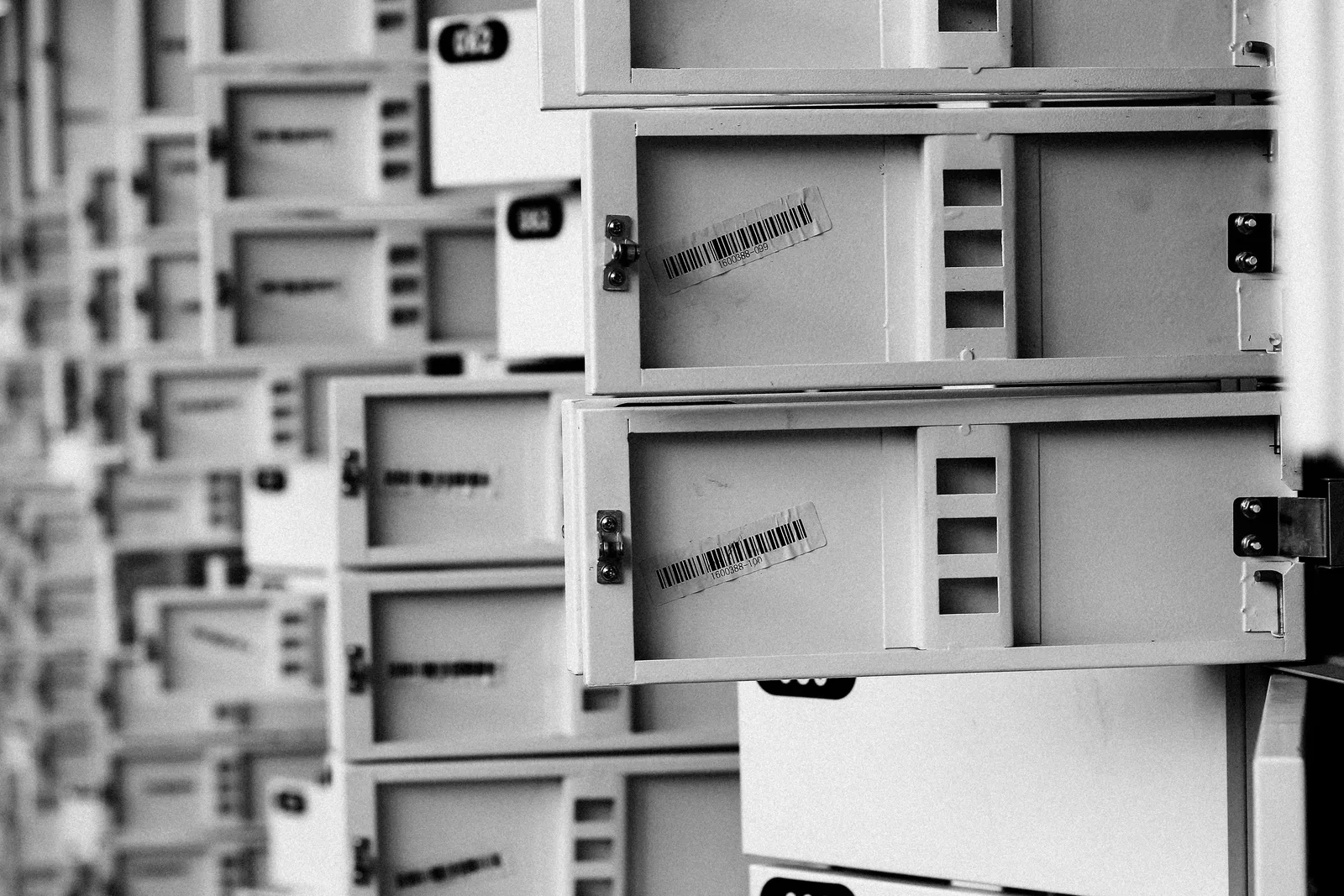
The right box depends on the property. A lone agent listing a house wants a cheap portable key safe. A condo board with fifty sales a year wants a managed rack with a record. Between those sit the networked electronic boxes that most brokerages already carry. Here is how the main options compare, and where each one earns its place.
Portable combination key safes
Master Lock and similar brands make portable key safes that clamp to a door handle. They open with a set code. They are cheap and need no battery. They also share one static code and keep no log, which is the weakness behind most lockbox theft stories.
Networked electronic lockboxes
Two names dominate here. SentriLock is owned by the National Association of REALTORS and, by its own count, supports more than 400,000 agents and brokers. Supra, now part of Honeywell, says it handles about 70% of networked listing access. Both log every open through a keyholder app.
“Supra digital solutions enable our members to deliver best-in-class service in the buying and selling process during this historic period of demand for housing,” Shawn Dauphine, Director of MLS at the Houston Association of REALTORS, on Supra Systems
Managed rack systems for buildings
A rack does not replace those boxes. It organizes them. LockboxRack mounts the boxes on one frame in a spot the property manager controls, then rents the slots online. RackLite is the open frame for standard lobbies. RackVault adds a locking enclosure for buildings that want the rack itself behind a door.
The rack and the boxes are not competitors. Most buildings keep whatever boxes their agents already use and simply corral them in one place. The rack adds the location control and the slot record that a pile of boxes on a railing never had.
| Option | Access method | Audit trail | Best for |
|---|---|---|---|
| Portable key safe (Master Lock) | Static dial code | None | Single rural or detached listing |
| Networked box (SentriLock, Supra) | App or keypad, per agent | Every open logged | Active brokerages and MLS members |
| RackLite by LockboxRack | Boxes on an open managed rack | Online slot record | Condo and apartment lobbies |
| RackVault by LockboxRack | Boxes in a locking enclosure | Online slot record | Buildings that want restricted rack access |
Figures above are current as of September 2026 and drawn from each vendor’s own reporting.
Explore RackLite for your building to see how the open-frame rack keeps boxes in one controlled spot instead of scattered across the property.
Insider Tips from Hamilton Property Managers

The people who run buildings learn the same lessons the hard way. Loose boxes get stolen. Codes get shared. Boxes stay on a door long after the sale closes. A few habits prevent most of it, and none of them cost much. These come from property managers and agents working in and around Hamilton, Ontario.
Keep boxes in one controlled spot
Cindy Cloutier, a Waterdown agent with Heritage Realty, learned this during the same 2021 theft wave.
“I wouldn’t leave another lockbox out there,” Cindy Cloutier, Heritage Realty, Waterdown, quoted in Real Estate Magazine (2021)
One rack in a monitored lobby beats twenty boxes on an outdoor rail. We recommend a spot near the front desk, where staff already pass through and casual tampering is unlikely.
Remove the box the day the deal closes
A box left after closing is a key to a home that just changed hands. Pull it the day the deal completes. On a rack, that is one online step: end the slot, and the record shows the box is gone. No forgotten box sits on a rail for a month.
Give inspectors and appraisers time-boxed access
Inspectors, appraisers, and cleaners all need to get in. Handing them the code breaks most board rules, because the rule is that a registrant stays on site. A slot booking with a set end date lets them in without a permanent key. I recommend booking their window the same day you confirm the appointment, so nothing slips.
A five-step lockbox routine
- Reserve one numbered slot per active listing, not per showing.
- Confirm the box holds the correct key before the first showing.
- Log inspector and appraiser visits as short, dated bookings.
- Check the access record each week against your showing calendar.
- End the slot the day the sale closes and retrieve the box.
How to Get the Most Out of Lockbox Access
A rack pays off when the policy around it is clear. The hardware is simple. The habits are what turn it into a clean access record and a small revenue line. Set the rules once, write them into the building’s showing policy, and the system mostly runs itself from there.
Set a slot-per-listing policy
Give each active listing one numbered slot for the length of the listing. Agents book online, the box lives on the rack, and the slot ends at closing. We tried a per-showing model first, and it created constant churn. One slot per listing is calmer and easier to audit.
Use the access log in disputes
When a resident asks who entered unit 704 on Tuesday, the log answers. Pull the slot history, match it to the showing calendar, and the question is closed in minutes. This is the single feature condo boards ask about most, because it turns a rumour into a record.
Write the policy down once. A one-page rule that says one slot per listing, boxes removed at closing, and inspectors booked as dated visits will carry a building for years. The rack enforces the habit, and the policy explains it to every new agent.
Right-size the rack to your building
Count your typical active listings, then add a few slots for turnover. A small building rarely needs more than one RackLite frame. A larger tower with steady sales may want RackVault behind a locked door. LockboxRack sizes the rack during the demo, so you are not guessing.
Get Started with a LockboxRack demo and the team will size a rack for your building’s real listing volume, not a generic estimate.
Lockbox Pricing, Schedules and What to Expect

Pricing for a managed rack is quote-based, because it depends on the building. Slot count, RackLite versus RackVault, and the install location all move the number. As of September 2026, LockboxRack sets pricing per building after a demo rather than publishing a flat rate. What follows is what to expect from the first call to the first booking.
How slot rental billing works
The core idea is simple. A realtor reserves a numbered slot for the length of a listing, and the building collects the fee for that slot. When the listing ends, the slot frees up for the next agent. The building earns from space that used to sit empty. For a deeper breakdown, read the LockboxRack pricing guide, or book a demo for exact figures.
Typical timeline from install to first booking
| Stage | What happens | Rough timing |
|---|---|---|
| Demo and sizing | Count listings, pick RackLite or RackVault | Week 1 |
| Install | Rack mounted in the chosen controlled spot | Week 2 |
| Onboarding | Agents scan the QR code and register online | Weeks 2 to 3 |
| First bookings | Slots reserved against live listings | Week 3 onward |
Timing varies by building; treat the table as a rough guide, current as of September 2026. You can also check current rack locations to see where racks are already installed.
What you get in the access record
Every reserved slot creates an online record: which slot, which agent, and the listing dates. A property manager can pull that history any time. There is no separate mobile app to install. Agents scan a QR code on the rack and manage the slot through the web interface.
If your building has boxes hanging off the railings, you already have the problem this solves. One rack, one record, one small revenue line. Explore RackLite for open lobbies, or Get Started with a demo to see a rack sized for your listing volume.
Frequently asked questions
What is a real estate lock box?
How does a lock box work in real estate?
Are real estate lockboxes safe?
How much does a real estate lockbox cost?
What is the difference between RackLite and RackVault?
Who can open a real estate lockbox?
Do real estate agents use SentriLock or Supra?
How do property managers earn revenue from lockboxes?
Where is LockboxRack based?
Is there a mobile app for LockboxRack?
Ready to get started with LockboxRack?
The organized, auditable alternative to lock boxes zip-tied to fences, pipes and fire exits: one fixed rack, numbered slots, online reservations and a paper trail, so buildings stop absorbing realtor access as an unpaid, unmanaged burden.